
It is mid-October in Chicagoland, which means roof season is almost over and ice dam season is quietly getting started. Every winter, roofers across DuPage County get the same January phone calls: brown stains spreading across a bedroom ceiling, water dripping from a light fixture, paint bubbling along an exterior wall. In most cases the culprit is not a failed roof. It is an ice dam — and the time to prevent it is now, before the first sustained freeze.
What an ice dam actually is
An ice dam is a ridge of ice that builds up along the lower edge of a roof. It forms through a simple cycle:
- Heat escaping from the living space warms the attic, which warms the upper part of the roof deck.
- Snow on the warm upper roof melts, and the meltwater runs down toward the eaves.
- The eaves sit beyond the heated walls of the house, so they stay cold. The water refreezes there.
- The refrozen ridge grows, and later meltwater pools behind it. With nowhere to drain, the water backs up under the shingles and into the house.
The leak that follows is sneaky. The roof itself may be in fine shape — the water is entering sideways, underneath the shingle system, which is why ice dam damage so often surprises homeowners with otherwise healthy roofs.
Why Chicagoland homes are prime candidates
Northern Illinois gets the exact weather pattern ice dams love: snow, followed by freeze-thaw cycles, followed by more snow. A few local factors make it worse:
- Older housing stock. Many Bensenville and DuPage County homes were built before modern attic insulation and ventilation standards, and their attics leak heat.
- Complex rooflines. Valleys, dormers, and additions create spots where snow collects and meltwater slows down.
- Clogged fall gutters. Leaves and debris trap water that freezes in place and gives the dam a head start.
- Recessed lights and bath fans. Older can lights and unsealed bath fan vents pump warm, moist air straight into the attic.
If your home has had ice dams before, it will almost certainly get them again until the underlying cause is fixed. The pattern repeats every winter.
Warning signs to watch for this winter
- A visible ridge of ice along the eaves or in valleys, growing after each snowfall.
- Heavy icicles concentrated in one section rather than evenly along the roof.
- Water stains on ceilings or upper walls, especially near exterior walls.
- Damp or compressed insulation in the attic, or frost on the underside of the roof deck.
- Gutters pulling away from the fascia under the weight of ice.
- Drips or leaks that appear during a thaw, then stop when it refreezes.
Catch these early. A small stain in January becomes a much bigger drywall, insulation, and mold repair by March.
What not to do
- Do not chip or hack at the ice. Pickaxes, hammers, and shovels tear shingles and void warranties.
- Do not assume heat cables fix the problem. They melt a channel so water can drain — a stopgap, not the fix for the heat loss causing it.
- Do not ignore it because the roof is new. Even a brand-new roof leaks when water backs up underneath the shingles far enough.
Prevention, ranked by impact
The goal of every fix below is the same: keep the attic — and therefore the whole roof deck — as cold as the outside air.
- Seal attic air leaks (cheapest, highest impact). Warm air pours through gaps around chimney chases, plumbing stacks, recessed lights, bath fan housings, and the attic hatch. Sealing these with caulk or expanding foam is the single most cost-effective ice dam fix, and it also cuts heating bills.
- Bring attic insulation up to R-49. For Illinois climates, the recommended attic insulation level is around R-49. If you can see the ceiling joists through your insulation, the attic needs more.
- Balance attic ventilation. A working system pulls cold air in low through soffit vents and exhausts it high through a ridge vent. Make sure soffit vents are not painted over or blocked by insulation.
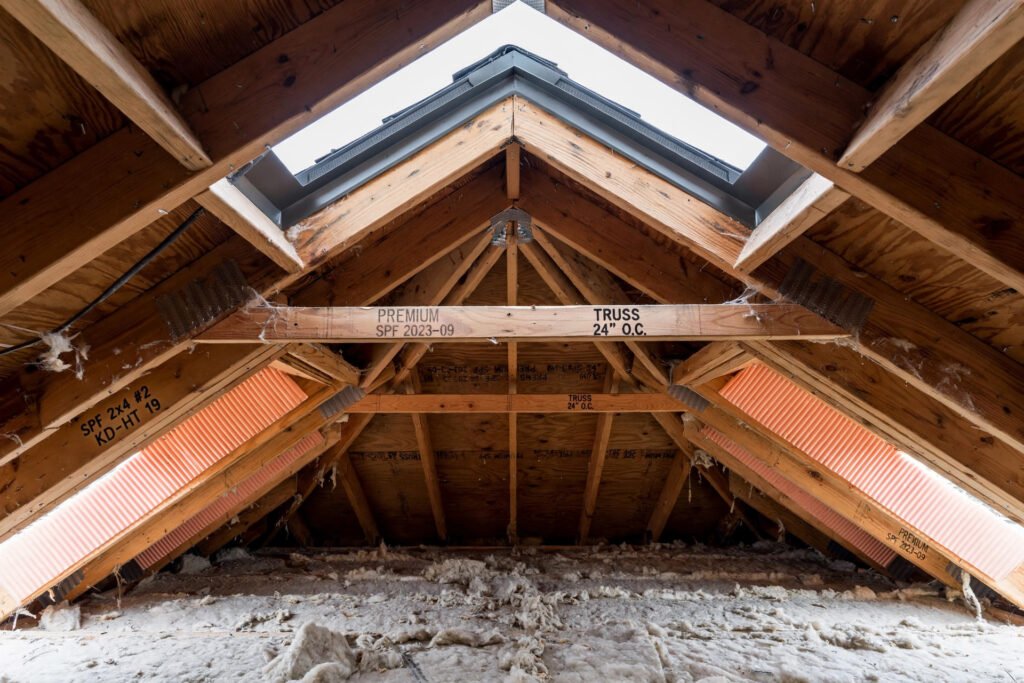
Heat escaping into the attic is the root cause of ice dams. Proper insulation and ventilation keep the whole roof deck cold. - Clean the gutters this fall. Clogged gutters trap the exact water that becomes an ice dam. A late-fall cleaning, after most leaves are down, removes one of the easiest contributing causes.
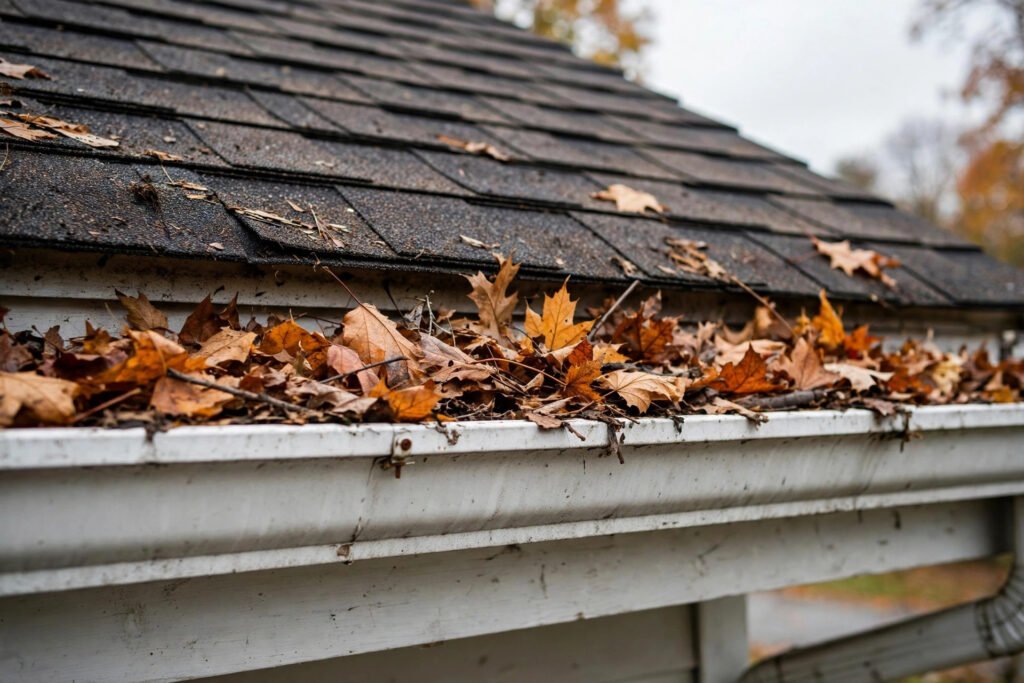
A late-fall gutter cleaning removes one of the easiest ice dam causes. - Roof-rake after heavy snowfalls. Removing snow from the lower three to four feet of the roof eliminates the raw material ice dams are made of. Use a plastic roof rake from the ground — never climb onto a snowy roof.
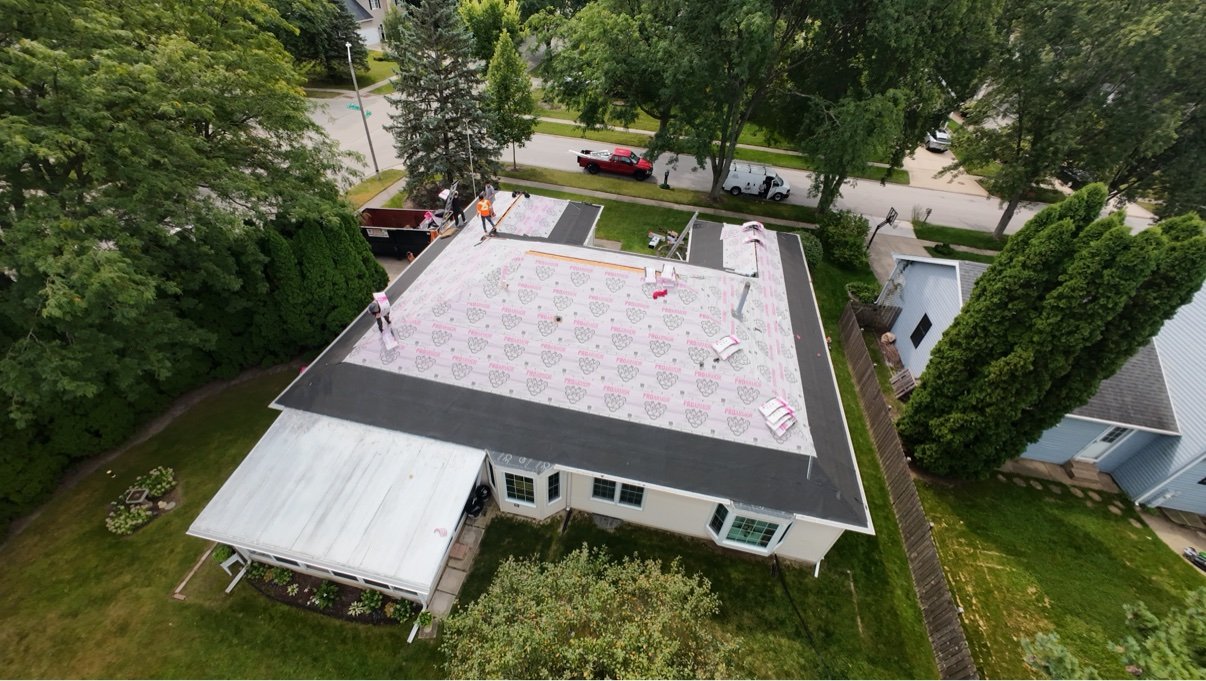
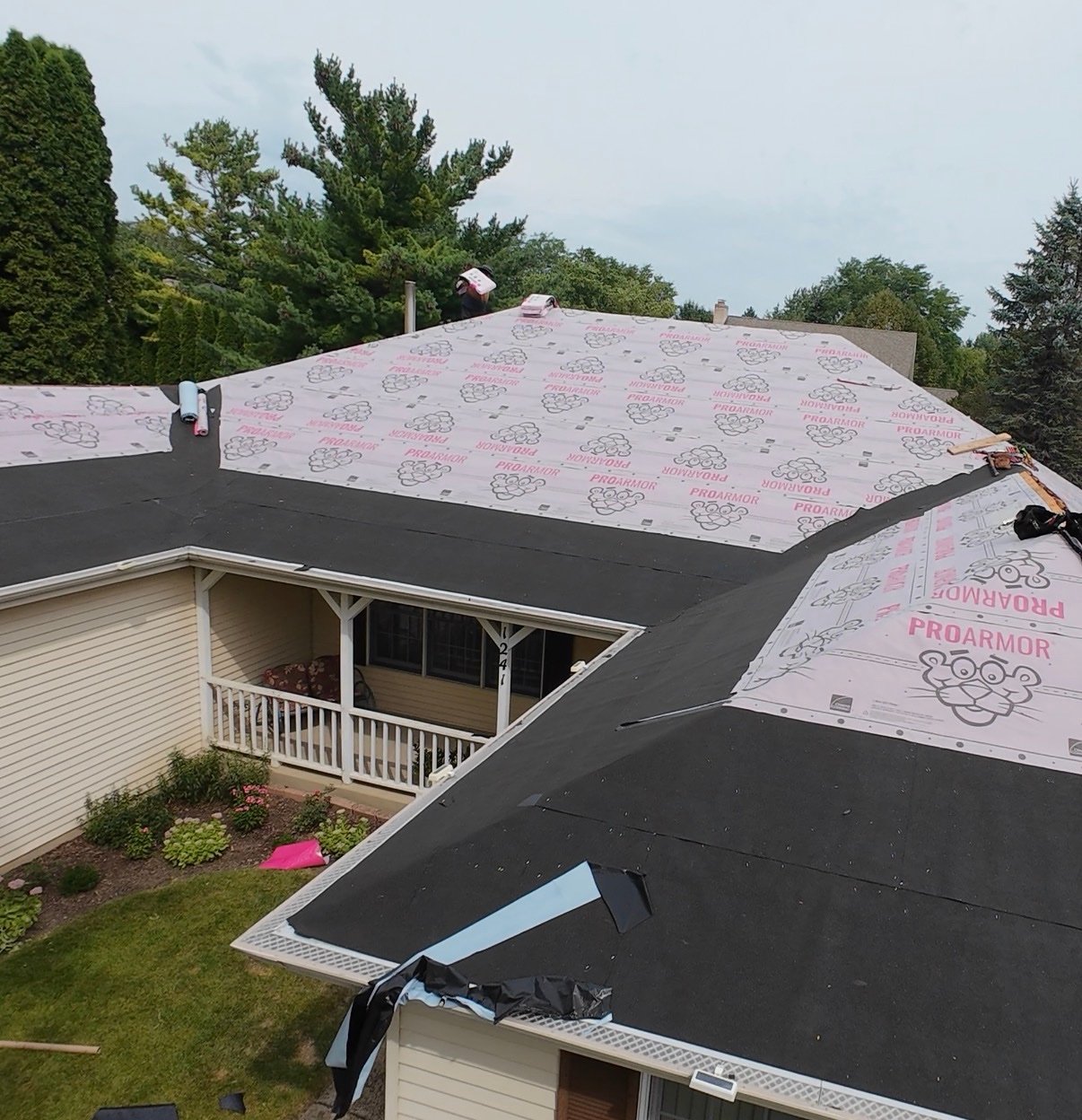
- When reroofing: ice and water shield. A self-sealing ice-and-water membrane along the eaves, in valleys, and around penetrations is the single best ice dam insurance. Confirm your contractor includes it.
- Heat cables as a stopgap only. For a chronic problem spot, heat cables can keep meltwater moving while the insulation and ventilation work is scheduled. Treat them as a bridge, not the fix.
The fall roof check that prevents winter surprises
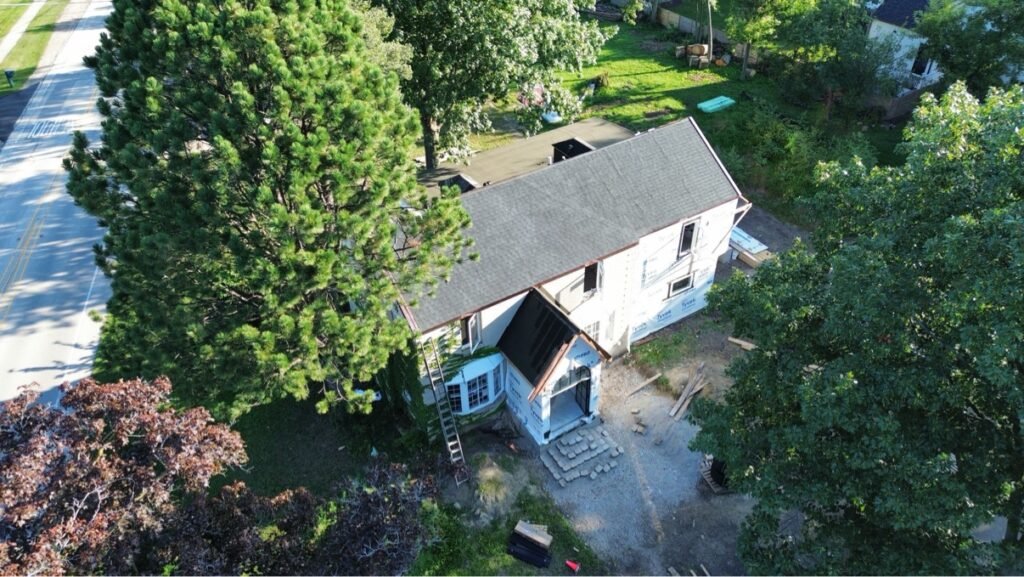
October is the ideal time for a professional once-over, while repairs are still easy to make. A proper fall inspection covers shingle condition, flashing at chimneys and skylights, attic ventilation and insulation levels, gutter condition and slope, and sealant and drip edge along the eaves. Arreguin Inc offers free estimates across Bensenville, Wood Dale, Addison, Elk Grove Village, and surrounding DuPage County communities.
Will insurance cover ice dam damage?
Homeowners insurance often covers sudden, accidental water damage from an ice dam — the stained ceiling and ruined drywall — but generally not the cost of removing the dam itself or fixing the underlying insulation and ventilation deficiency. If you spot damage, photograph it, mitigate further loss, and review your policy before calling the insurer.
Frequently asked questions
How do I know if I have ice dams or just icicles? Thin, even icicles are normal. Suspect ice dams when you see a thick ridge of ice at the roof edge, heavy icicles concentrated in one area, or interior staining during thaws.
Can I just knock the icicles down? Knocking down hanging icicles from the ground is fine. Do not pull or pry at ice adhered to the roof edge — you will damage shingles and gutters.
Do heat cables really work? They work as a drainage aid on problem spots. They do not stop the heat loss that creates the dam. Fix insulation and ventilation for the permanent solution.
Is R-49 insulation really necessary in Illinois? R-49 is the widely recommended attic target for northern Illinois. Many older homes have far less.
My roof is only a few years old. Can I still get ice dams? Yes. Ice dams are caused by heat loss and weather, not roof age.
When should I call a roofer instead of handling it myself? Call when you see interior water stains, ice ridges growing after every storm, gutters pulling away, or damp attic insulation — or if your home has dammed up two winters in a row.
Get a free winter roof check
Call Arreguin Inc at (847) 791-2950 — free estimates for roofing, gutters, and ventilation across Bensenville and DuPage County.
Pingback: Fall Roof Inspection Checklist for Illinois Homeowners | Arreguin Inc